
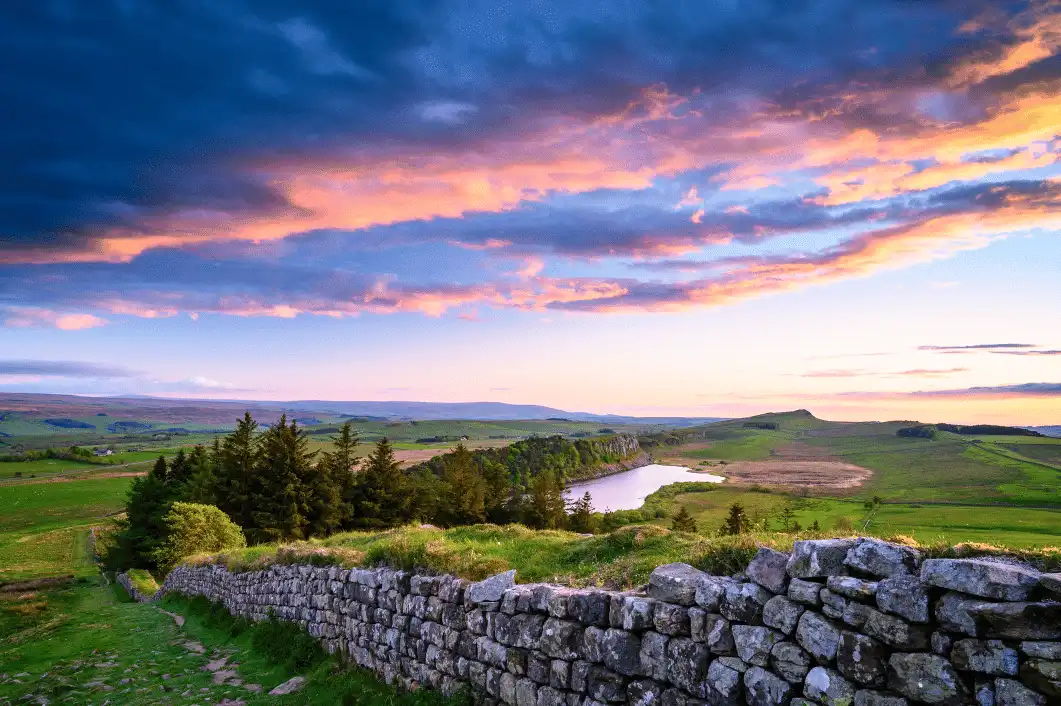
Hadrian's Wall is a Roman defensive fortification in northern England that was built in 122 AD. The wall ran from the River Tyne in the east to the Solway Firth in the west, and was around 73 miles (117 km) long. It is thought to have stood up to around 15 feet (4.5 m) high and was 8 to 10 feet (2.5–3 m) wide.
The wall was built by the Roman Emperor Hadrian as a means to defend the northernmost part of his empire from Barbarian invasions. The wall was also intended to serve as a symbol of Roman power and dominance.
Today, Hadrian's Wall is one of Britain's most popular tourist attractions. Visitors can explore the remains of forts, towers, and other structures that are scattered along the length of the wall.
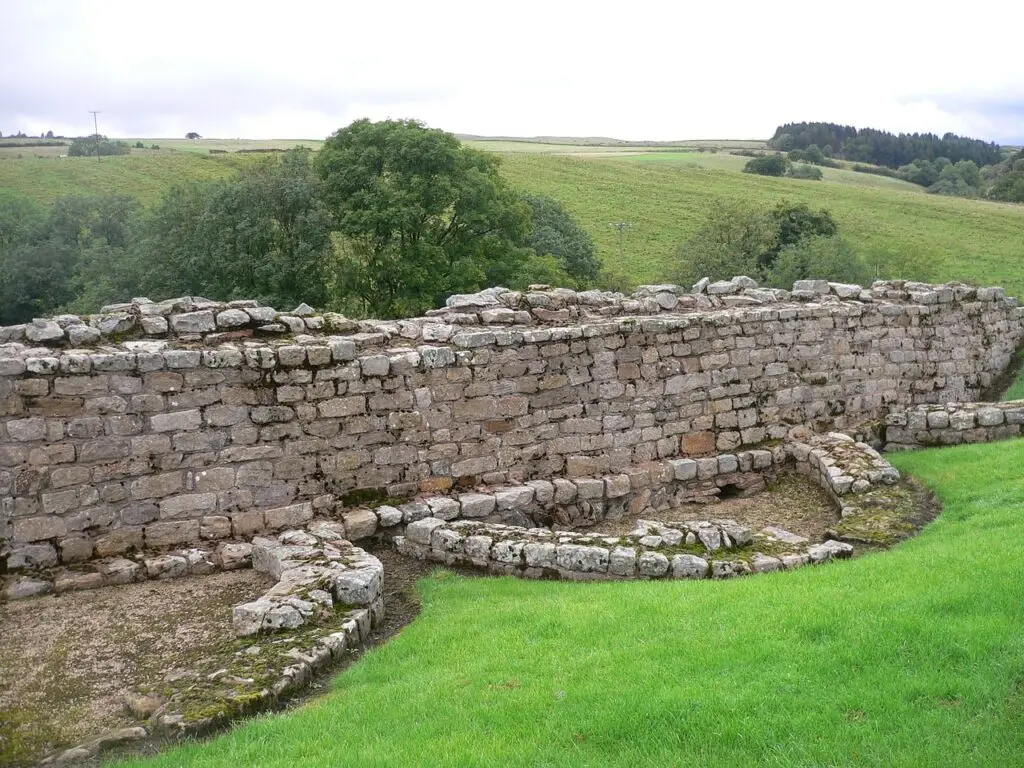
Hadrian's Wall was one of the most impressive feats of engineering in the ancient world. It stretched for 80 Roman miles (73 modern miles) from coast to coast, and today visitors can still see many of its original features, including long stretches of stone wall, milecastles, turrets and forts.
Top 5 Historical Sites on Hadrian's Wall
Hadrian's Wall spans a wide area which is rich in history and culture with many historical sites along the trail that are worth visiting. Here are the top 5 historical sites on Hadrian's Wall:
- Vindolanda – Vindolanda is a Roman fort just south of the Wall in Northumberland. It was first built around AD 85, decades before Hadrian's Wall, and was occupied into the 4th century. It is famous for the Vindolanda writing tablets, among the oldest surviving handwritten documents in Britain, and excavations there continue every summer.
- Housesteads Fort – Housesteads (Vercovicium) was built around AD 124 and sits high on the Whin Sill escarpment in Northumberland. It is the most complete Roman fort in Britain, with well-preserved barracks, granaries and latrines.
- Chesters Fort – Chesters (Cilurnum) was a cavalry fort built around AD 124 beside the North Tyne at Chollerford. It has the best-preserved Roman military bath house in Britain and a museum of finds collected by the Victorian antiquarian John Clayton.
- Birdoswald Fort – Birdoswald (Banna) stands above the River Irthing near Gilsland in Cumbria. The longest continuous surviving stretch of the Wall runs right beside it, and the site was occupied long after the Romans left.
- Segedunum – Segedunum Roman Fort at Wallsend marks the eastern end of the Wall and the start of the Hadrian's Wall Path. Its viewing tower looks over the excavated fort, and it has a reconstructed Roman bath house.
Hadrian's Wall is a fascinating historical area with plenty to see and do. If you're interested in learning more about the Roman Empire, or if you just want to explore a beautiful piece of history, the Hadrian's Wall Trail is definitely worth a visit. With so many different sites to choose from, you'll never be bored. So what are you waiting for? Start planning your trip today!