
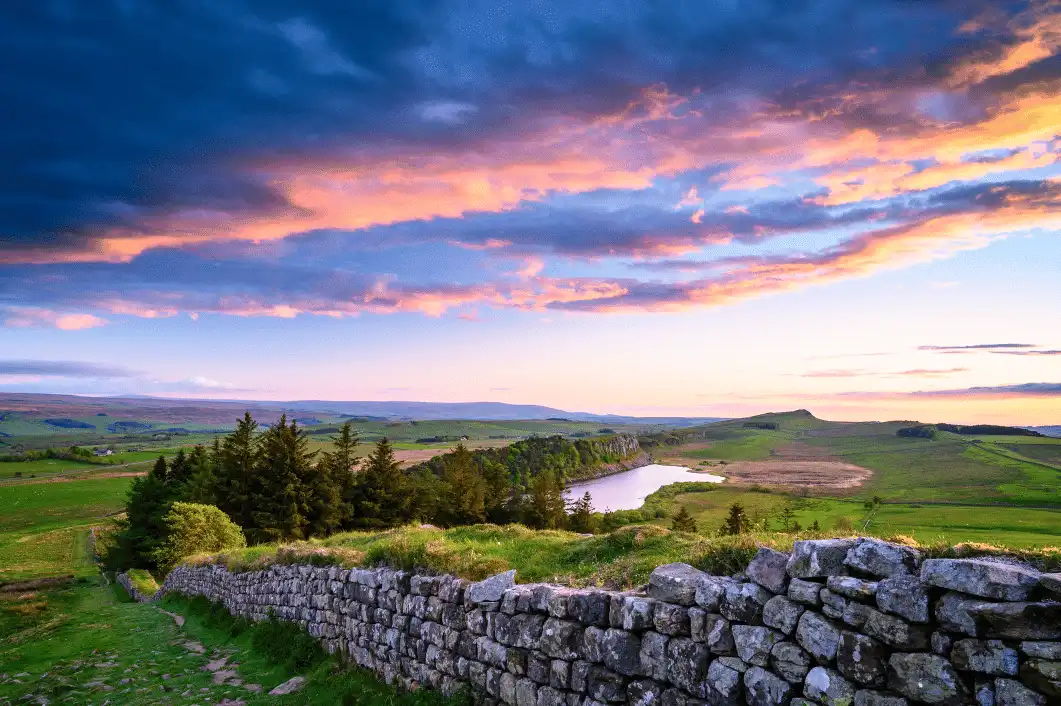
Hiking Hadrian's Wall in Northumberland is a fascinating adventure and Northumbria is an amazing region to explore.
Introduction to Hadrian's Wall
Hadrian's Wall was built by the Roman Emperor Hadrian in 122 AD. The wall ran from the River Tyne in the east to the Solway Firth in the west, and was 80 Roman miles (about 73 miles) long. The wall was built of stone and turf, with a defensive ditch to the north and a large earthwork, the Vallum, to the south. Small forts called milecastles stood every Roman mile, with two turrets between each, and larger forts were spaced along its length.
The purpose of the wall was to keep out the barbarian tribes who lived north of Britannia. The wall was also intended to be a symbol of Roman power and a reminder to the people living in Britannia that they were part of the Roman Empire.
The wall fell into disrepair after the Romans left Britannia in 410 AD, but many parts of it are still standing today. You can still see Hadrian's Wall in Northumberland National Park, which is where we went hiking.
Why Hike Hadrian's Wall
There are many reasons to hike Hadrian's Wall. The wall is a world-famous UNESCO World Heritage Site and is one of the most popular tourist attractions in England. It is also a great way to get outdoors and enjoy some fresh air and exercise.
Hiking Hadrian's Wall is a great way to learn about Roman history. The wall was built by the Romans in the 2nd century AD to protect their empire from northern invaders. Today, it is a fascinating archaeological site that provides insight into the lives of the Roman soldiers who guarded it.
The wall runs for 73 miles (117 kilometers) across England, from coast to coast. Along the way, there are numerous ruins of forts, towers, and other Roman structures to explore. The scenery is also stunning, with rolling hills, wildflowers, and sheep dotting the landscape.
Whether you're a history buff or just looking for a beautiful place to take a hike, Hadrian's Wall is well worth a visit.
The Difficulty of Hiking Hadrian's Wall
Hiking Hadrian's Wall is a real challenge, but well within reach of regular walkers. The Hadrian's Wall Path runs for 84 miles (135 km) from coast to coast, and most people take six to eight days to walk it. The central section along the Whin Sill crags is the toughest, with steep climbs and descents, while the stretches at either end are much gentler. Villages, pubs and B&Bs are spread along the route, although some stretches are remote, so it pays to carry water and snacks.
The weather in Northumberland and Cumbria is changeable, and you can see sunshine, wind and rain on the same day. Good waterproofs and comfortable, broken-in boots make a big difference.
Planning a Hike on Hadrian's Wall
If you're walking the whole trail from east to west, you'll start at Segedunum Roman Fort in Wallsend, which is easy to reach on the Tyne and Wear Metro from Newcastle city centre. Once you know where you're starting, it's time to plan the rest of your hike.
There are a few things to consider when planning a hike on Hadrian's Wall. The first is how long you want to hike for. The Hadrian's Wall Path is 84 miles long, so if you're planning on hiking the entire length, you'll need to be prepared for a multi-day trek. If you're not up for that, there are shorter options available as well.
The second thing to consider is what time of year you want to hike. The weather in Northumberland can be unpredictable, so it's important to pick a time of year when the weather is likely to be good. The trail is best walked between May and October: the National Trail asks walkers to avoid the wet winter months, when the ground is soft and the buried archaeology is easily damaged. Always check the forecast before you go.
Preparation for your hike on Hadrian's Wall
Although Hadrian's Wall is now a ruin, it is still an impressive sight. The wall was built by the Roman Emperor Hadrian in the 2nd century AD to mark the northern limit of the Roman Empire. It runs for 73 miles (117 km) from coast to coast across England.
Most of the wall is in Northumberland, a county in northeast England. Hadrian's Wall Country includes not only the remains of the wall but also many Roman forts and other archaeological sites. It is a beautiful area, with rolling hills, wild moorland, and far-reaching views.
There are several ways to hike Hadrian's Wall. You can follow the entire length of the wall, or do a shorter section if you don't have time for the whole thing. There are also a number of different routes you can take, depending on where you start and finish.
If you want to hike the whole wall, allow at least five days, and ideally six or more. If you're doing a shorter section, two or three days should be enough. Remember that this is a challenging hike, so make sure you're prepared before setting out.
Here are some things to bear in mind when preparing for your hike:
Check the weather forecast and plan your hike accordingly. The weather can be changeable in England, so it's always best to be prepared for all eventualities. Make sure you have appropriate clothing for both hot and cold weather conditions.
Maps and Routes
There are a number of different ways to hike Hadrian's Wall, depending on your fitness level, time frame, and desired scenery. The most popular route is the 84-mile (135km) Hadrian's Wall Path, which runs the length of the wall from coast-to-coast.
For those looking for a shorter hike, there are a number of options along Hadrian's Wall. The central section between Chollerford and Gilsland, taking in Housesteads, the Whin Sill crags and Birdoswald, is the most scenic and can be walked in two or three days.
Whichever route you choose, be sure to pick up a map ahead of time and plan your route before setting out. There are numerous resources available online and at local bookstores.
Conclusion
After our hike along Hadrian's Wall, we had a new appreciation for the Roman Empire. We saw first-hand how the wall was built and how it protected the empire from invaders. We also saw how life was for the soldiers who guarded the wall.
We would recommend this hike to anyone looking for a challenging yet rewarding experience. You don't need to be a history buff to appreciate this hike, but it helps to have some knowledge of the Roman Empire.